It's a typical hold back among environmental change down-players —
the individuals who acknowledge its existence, yet who contend that we can't or
shouldn't do much about it — that, beyond any doubt, first world Western
nations could do significantly more to lessen their discharges, yet it scarcely
matters when you have nations like India and China pumping increasingly
contamination into the exceptionally same biosphere. The contention has been
getting weaker as of late, as creating countries have marked on to significant
atmosphere activity arranges. Presently, Chinese nuclear vitality specialists
have declared a goal-oriented arrangement to start transforming the nation's
coal plant foundation into working atomic power stations. The principal working
show unit could start genuine business operations as right on time as 2018.
Arrangment:
 The arrangement could transform the developing Asian country into
one of the world's most forceful performing artists on environmental change —
however similarly as essential to China is atomic's capacity to manage its
developing issue with air contamination. It could likewise kickstart the
worldwide atomic industry, which was hailing even before the Fukushima
catastrophe of five years prior. China might be going to demonstrate that
recently progressed atomic tech offers a route for some substantial industrialized
countries to significantly decrease their carbon impression without bankrupting
themselves, or just wagering that sun oriented and wind power will advance
sufficiently quick to matter at all on the worldwide utility scale.
The arrangement could transform the developing Asian country into
one of the world's most forceful performing artists on environmental change —
however similarly as essential to China is atomic's capacity to manage its
developing issue with air contamination. It could likewise kickstart the
worldwide atomic industry, which was hailing even before the Fukushima
catastrophe of five years prior. China might be going to demonstrate that
recently progressed atomic tech offers a route for some substantial industrialized
countries to significantly decrease their carbon impression without bankrupting
themselves, or just wagering that sun oriented and wind power will advance
sufficiently quick to matter at all on the worldwide utility scale.
The news originates from the current year's High Temperature Reactor Conference, where Professor Zhang
Zuoyi apparently gave a discussion on the subject, accepting a "maintained
round of applauding," finish with "a couple hoots" from the
assembled researchers. The explanation behind their excitement ought to be
self-evident. Here, we could have a potential answer for the greatest
functional issue with a vast scale turn toward "Era IV" atomic
outlines with propel, inactive wellbeing frameworks: cost. Under the proposed
arrange, China can utilize re-utilize a tremendous extent of the cash it spent
building coal plants, expelling the heaters and boilers from its super-basic
coal plants and supplanting them with the stripped-down hearts of
high-temperature gas cooled atomic reactors (HTGRs).
The coal stations focused under this arrangement are various, yet
particular. Just super-basic steam plants are worked to withstand the high
working temperatures HTGRs require. The early target stations ought to likewise
be as near populace focuses as could be expected under the circumstances .
Principle Objectives:
Once more, one of the
principle objectives here is to diminish the wellbeing impacts of coal plant
air contamination, and you can't fulfill that by decreasing emanations amidst
no place. Along these lines, if this arrangement is to really go ahead, it will
require present a solid defense for its own particular inborn wellbeing.
A graphite-shelled atomic stone.
Thus, the venture will concentrate on a type of atomic plant
called a stone bed reactor, in which the atomic fuel is partitioned into
minimal smaller scale fuel pellets that are then developed to baseball-sized
circles with progressive layers of graphite and clay materials. The coatings on
every fuel pellet go about as the neutron arbitrator, doing likewise work as
the water that lies between the fuel bars in an established warm reactor, and
the dissolving purposes of these coatings are all higher than any temperature
the fuel pellets can make in this reactor. Many these circles turn into a
rubble heap with space in the middle of for gas to stream, in this for this
situation helium, and ingest warm before diverting it. Now and again, this
warmed gas specifically turns a turbine, yet in this arrangement it will warm a
twosome of boilers to make steam, and turn the turbine all the more
customarily. The absence of the famously complex cooling frameworks of water
reactors is something that makes the Chinese retrofit arrange so possibly
moderate. What's more, the gas that cools the framework doesn't ingest neutron
radiation so effortlessly as water, and along these lines HTGRs make a far
lower volume of radioactive items that could break or open laborers to risk.
The coolant is a gas at all temperatures, never consolidating or dissipating,
and as said it can't make a pressurized blast like steam.
In this manner, rock bed reactors are on a basic level emergency
verification, giving no way to the sorts of falling disappointments that have
prompted to the most genuine atomic mishaps ever. This implies on account of a
calamitous disappointment, the arrangement is actually just to leave. There's
no compelling reason to do anything — the general purpose of the stone bed
configuration is that each and every segment can fall flat, and the most
noticeably awful result will be lost power era. It will require a long
investment for the reactor to actually chill off — however of course, Fukushima
cleanup endeavors haven't precisely been continuing at a lightning pace,
either. There are drawbacks, obviously. The fuel rocks are costly to create, in
certainty a lot more costly than the group expected, and the parts are
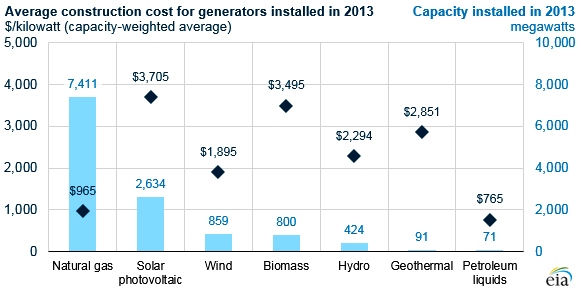
similarly as dear — at this moment, the cost is around $5,000 per kilowatt of
introduced limit, or around 1.5 times as costly as sun based photovoltaic
cells, and more than five times as costly as normal gas. Nonetheless, China has
a remarkable favorable position in that it basically has such a large number of
reasonable reactors to change along these lines. A great part of the
anticipated cost reserve funds will originate from large scale manufacturing of
parts and particularly fuel pellets, and the group trusts that as they can
bring the cost down to around $2,500 per kilowatt, similar with different types
of green power. In the event that that large scale manufacturing industry ever
gets to a bring up it's coming up short on Chinese coal plants to nourish, it
could simply attempt to manage its model by turning its advertising outward, to
different countries.
 In any case, recollect, these new reactors should fill three
separate needs for China, all in the meantime: control the proceeding with
procedure of bringing the whole populace into the present day world; let China
experience its universal atmosphere commitments; and tidy up the air. At this
moment, cost aside, atomic is the unparalleled innovation that can give each of
the three advantages immediately.
In any case, recollect, these new reactors should fill three
separate needs for China, all in the meantime: control the proceeding with
procedure of bringing the whole populace into the present day world; let China
experience its universal atmosphere commitments; and tidy up the air. At this
moment, cost aside, atomic is the unparalleled innovation that can give each of
the three advantages immediately.
It's maybe stressing that China has such a zippy course of events
for these establishments, since even a minor mischance could tank the profile
of HTGRs, around the world. The innovation has just been given a modest bunch
of chances in the US and Germany, keeping in mind the Chinese government is
surely fit for bulling forward on a disliked arrangement, Western majority
rules systems are more subject to the impulses of the general population. China
has a shot here to demonstrate to the world that atomic can be sheltered,
functional, and ground breaking — and it likewise has the opportunity to demonstrate
the inverse.


 "Here,
we show that living spinach plants (Spinacia oleracea) can be designed to serve
as self-fueled pre-concentrators and autosamplers of analytes in encompassing
groundwater and as infrared correspondence stages that can send data to a cell
phone," the paper's creators said their presentation.
"Here,
we show that living spinach plants (Spinacia oleracea) can be designed to serve
as self-fueled pre-concentrators and autosamplers of analytes in encompassing
groundwater and as infrared correspondence stages that can send data to a cell
phone," the paper's creators said their presentation. 


